A website for craftspeople: showcase site or online shop?
Published on , updated on 5 min read The 123Ventes team
You are a craftsperson, your customers find you by word of mouth, and it works rather well. So why have a website? Because even word of mouth goes through Google these days: someone recommends you, and the person types your name to see your work, your opening hours or your prices. If they find nothing, or a page that dates from 2012, they hesitate.
The good news is that a craftsperson’s website does not need to be complicated. Above all, it has to answer one question: is it there to present your work, or to sell it?
Showcase site or online shop: the real question
It all depends on what you do.
- You work at the customer’s premises or on quotation: plumber, electrician, builder, joinery fitter… A showcase site is often enough: your services, your past work, the area you cover and a simple way to contact you. The site is there to make the phone ring.
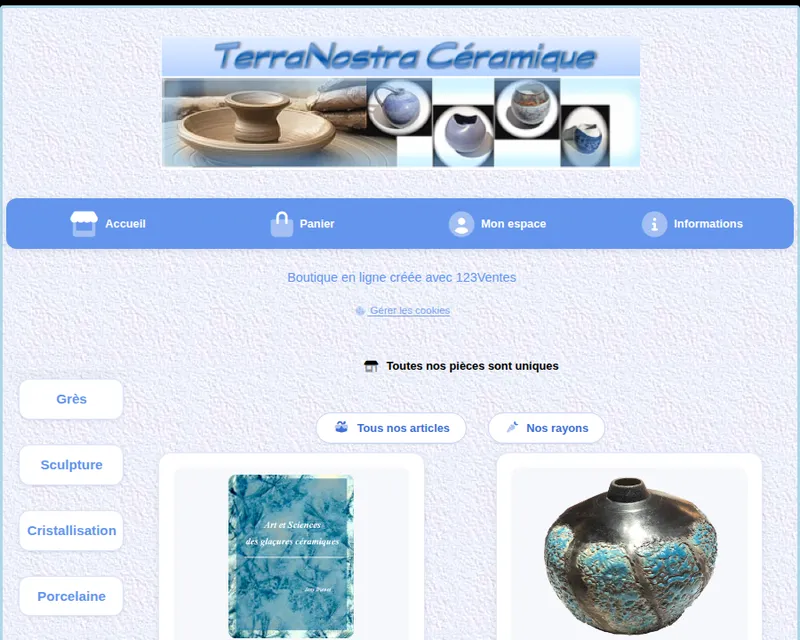
- You make objects: ceramics, soaps, jewellery, sewing, leather goods, woodwork… Here, an online shop makes perfect sense. A customer who discovers your pieces on a Sunday evening can buy them straight away, instead of noting your name and forgetting you.
- You do both: a cabinetmaker who sells chopping boards and also does bespoke work, for example. A shop with a “made to order” page covers both needs.
A shop can always serve as a showcase, but not the other way round. If you are unsure, go for a shop: you do not have to sell everything online from day one.
The essential pages of a craftsperson’s website
No need for fifty pages. Five are enough to start with:
- The home page: who you are, what you do, where you are, in three sentences and a beautiful photo of your work.
- Your work or your products: this is the most viewed page. Sharp photos, in daylight, with a word about each piece.
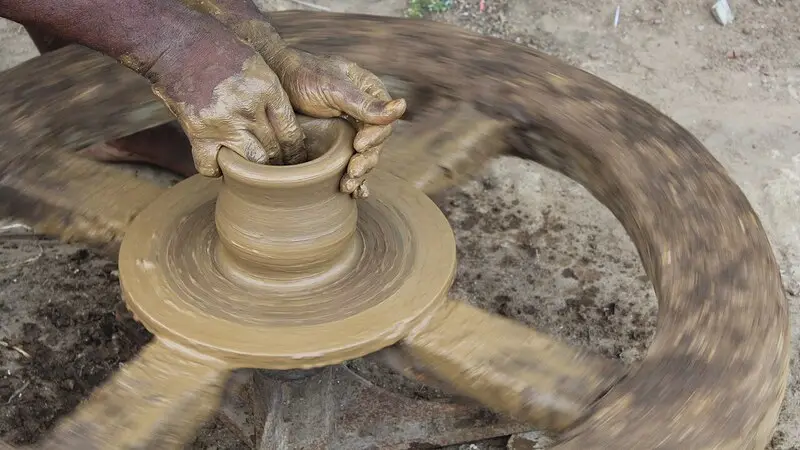
- Your workshop, your story: people buy from a craftsperson as much as they buy an object. Show your hands, your tools, your skills.
- Contact: phone number, address, opening hours, area covered. Clickable on mobile, since that is where people look for you.
- The legal notice and, if you sell online, your terms and conditions of sale. Not thrilling, but compulsory in France.
Add your customers’ reviews as soon as you have some: nothing reassures a stranger more than the review of another satisfied stranger.
How much does a craftsperson’s website cost?
The differences are huge, and the most expensive is not always the one that sells best. Roughly:
- Doing it yourself with a platform: from about €20 to €40 a month, often with domain name and hosting included. Wix is the best known for showcase sites; to sell, see our alternative to Wix.
- Having it done by a freelancer or an agency: from a few hundred euros for a simple showcase site to several thousand for a bespoke shop, plus maintenance.
- A turnkey package: a professional builds the site on a platform, you pay for the set-up once, then the subscription.
To compare these three routes in detail, read creating an e-commerce site: DIY, agency or platform. And for the full first-year budget, see budget for opening an online shop.
And if you go for the shop, our guide online shop for craftspeople explains what to plan for, from the catalogue to delivery.
How much time does it take?
This is often the real worry: “I already don’t have time to do everything in the workshop”. Allow a weekend for the set-up if your photos are ready, then an hour or two a week to add products, answer messages and prepare orders.
The longest part is not the site, it is the photos and the descriptions. A tip: photograph each new piece as soon as it leaves the workshop, in the same spot, with the same light. Within a month, your catalogue is ready without having spent a whole day on it. The complete method is in our guide to photographing your creations with a smartphone.
Being found by customers in your area
A beautiful website nobody sees is a bit like a shop window in a dead-end street. To make sure people find you:
- put your trade and your town in your page titles, for example “Potter in Vence” rather than “Welcome”;
- create your Google listing (Google Business Profile), which is free, with a link to your website;
- ask your happy customers for reviews, and reply to them;
- describe your products in your customers’ words: “handmade stoneware mug” is searched for more than “unique piece no. 47”.
To go further, our article on SEO for an online shop, for beginners explains everything step by step, without jargon.
Examples by trade
Every trade has its own specifics: soaps have labelling obligations, jewellery has sizes, clothing has more frequent returns, the plumber has a service area. We have made a page for each:
- craft and making trades: potter and ceramicist, soap maker, jewellery designer, woodworker, dressmaker, leatherworker;
- building trades: plumber, electrician, builder.
All the trades are on the online shop by trade page.
And with 123Ventes?
123Ventes was designed for craftspeople and small shops: €29.90 a month or €319.90 a year, with no commission on your sales. Hosting, security, card and PayPal payments, delivery and collection from the workshop are included, and you can use your own domain name. You can use it as a showcase, as a shop, or both.
No time to do it yourself? We can build your site for you: that is our turnkey shop creation. And to see what our customers think, read their reviews.
Conclusion
A craftsperson’s website does not need to be big or expensive. It has to show your work, say where to find you and, if you make objects, let people buy them without waiting for the next market. Start small, with good photos and five pages, then let it grow at the pace of your workshop.
👉 Try 123Ventes for free and see what your website could look like.